How to Plan Meaningful Activities Based on Children’s Interests
How to Plan Meaningful Activities Based on Children’s Interests
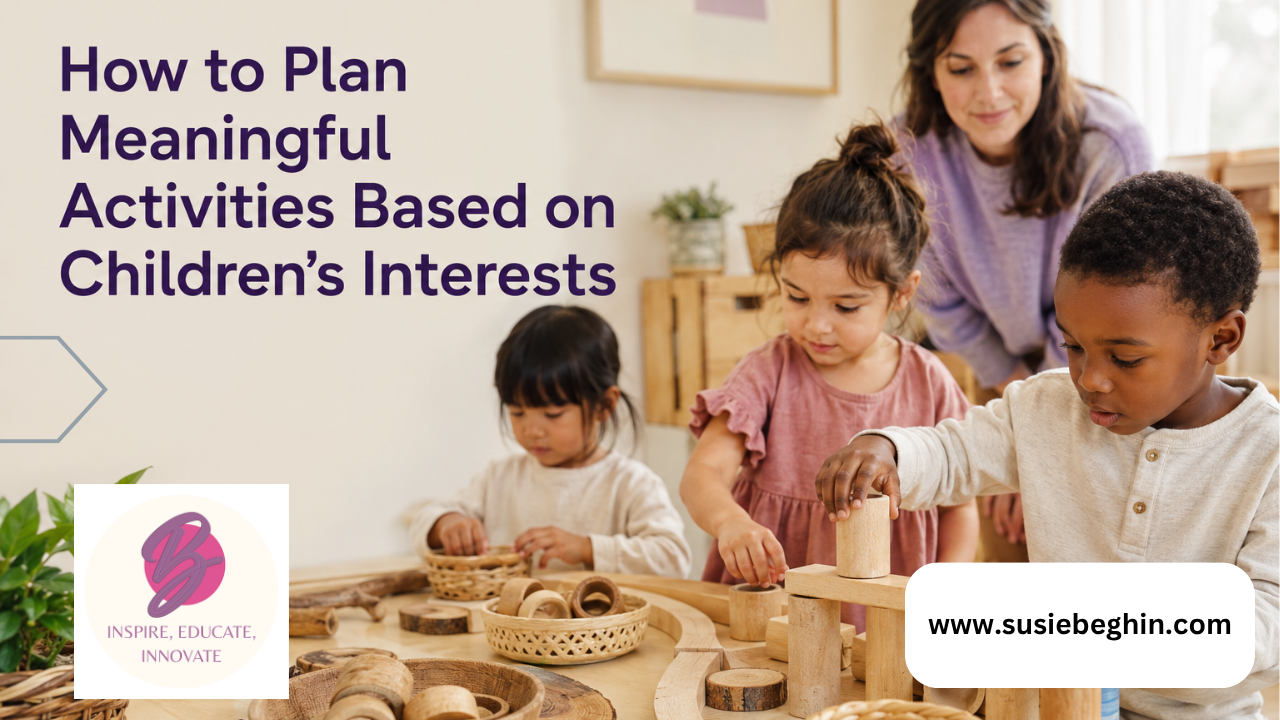
Learn how play schemas help you understand children’s interests, extend their learning and plan purposeful activities—without starting from scratch.
You notice a child carrying blocks from one side of the room to the other—again and again.
Another child is fascinated by rolling cars down ramps, dropping objects from the climber and watching water pour from one container to another.
Someone else spends the morning lining up animals, enclosing objects with blocks or connecting every material they can find.
You can see that the children are interested. You know their repeated actions must mean something. But then comes the question:
What should I offer next?
For many early childhood educators and home child care providers, this is where planning becomes difficult. You want to follow the children’s interests and create meaningful, play-based experiences—but recognizing an interest is not the same as knowing how to extend it.
That is exactly why I created the
Schema Activity Bundles.
These ready-to-use resources help you understand what children may be exploring through their play and turn those observations into purposeful learning experiences across different areas of development.
Why I Created These Activity Bundles
The Problem: Planning Takes More Time Than You Have
Early childhood educators and providers are busy. Your day is filled with supporting children, communicating with families, documenting learning, preparing the environment, cleaning materials and responding to the unexpected moments that are part of working with young children.
Then, somehow, you are also expected to find time to plan.
You may spend your evenings searching online for activity ideas, saving posts you hope to revisit or trying to adapt activities that do not quite fit the children in your program. You might find plenty of attractive ideas, but still have to figure out:
- What materials are needed?
- How should the activity be introduced?
- What are the children learning?
- How can the experience be extended?
- How does it connect to your program goals?
A list of ideas may provide inspiration, but it does not remove the planning work. You still have to turn each idea into a complete experience.
The Schema Activity Bundles do that work for you.
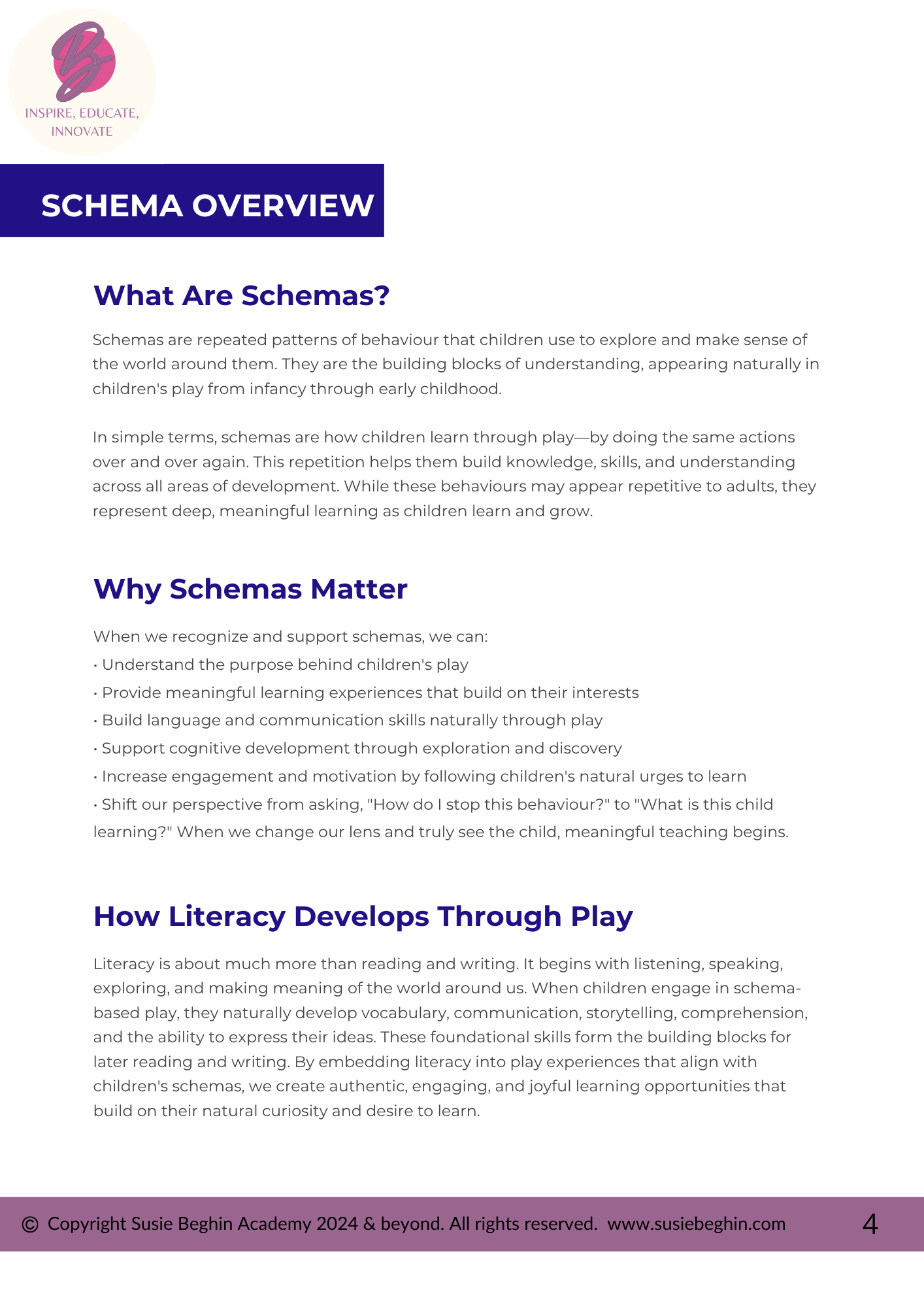
The Challenge: You Can See the Interest, but You Don’t Know How to Extend It
Child-led learning begins with observation. When we pay attention to children’s repeated actions, we gain clues about what they are trying to understand.
A child who constantly moves objects may be exploring the
transporting schema. A child who drops, throws, rolls or pours may be investigating
trajectory. A child who creates borders, builds fences or places objects inside containers may be exploring
enclosing.
Once you recognize the schema, however, you may still wonder what to do with that information.
Should you add different materials? Create a new invitation? Connect the interest to literacy, math, science or physical development? How do you support the learning without taking over the play?
The goal is not to stop the repeated behaviour or redirect the child toward an unrelated activity.
The goal is to understand the learning behind the behaviour and offer experiences that allow the child to explore the same idea in new and meaningful ways.
The Schema Activity Bundles help you move from “I notice this” to “I know what I can offer next.”
The Planning Gap: You Want to Use Schema Play, but You Don’t Know Where to Begin
Schema play can sound complicated when you first learn about it. You may understand the theory but feel unsure about how to apply it to your daily or weekly curriculum planning.
You may ask:
- Do I plan for one schema at a time?
- Can one experience support more than one schema?
- How do schemas connect with developmental goals?
- Can I use schemas to plan across different curriculum areas?
- How do I keep the learning child-led while still planning intentionally?
You do not need to completely redesign your program. You need a practical bridge between what you observe and what you plan.
That is what these
Schema Activity Bundles

The Solution: Ready-to-Use Schema-Based Lesson Plans
The Schema Activity Bundles are not simply lists of activity ideas.
They contain
complete, ready-to-use lesson plans designed to help you plan with purpose and confidence.
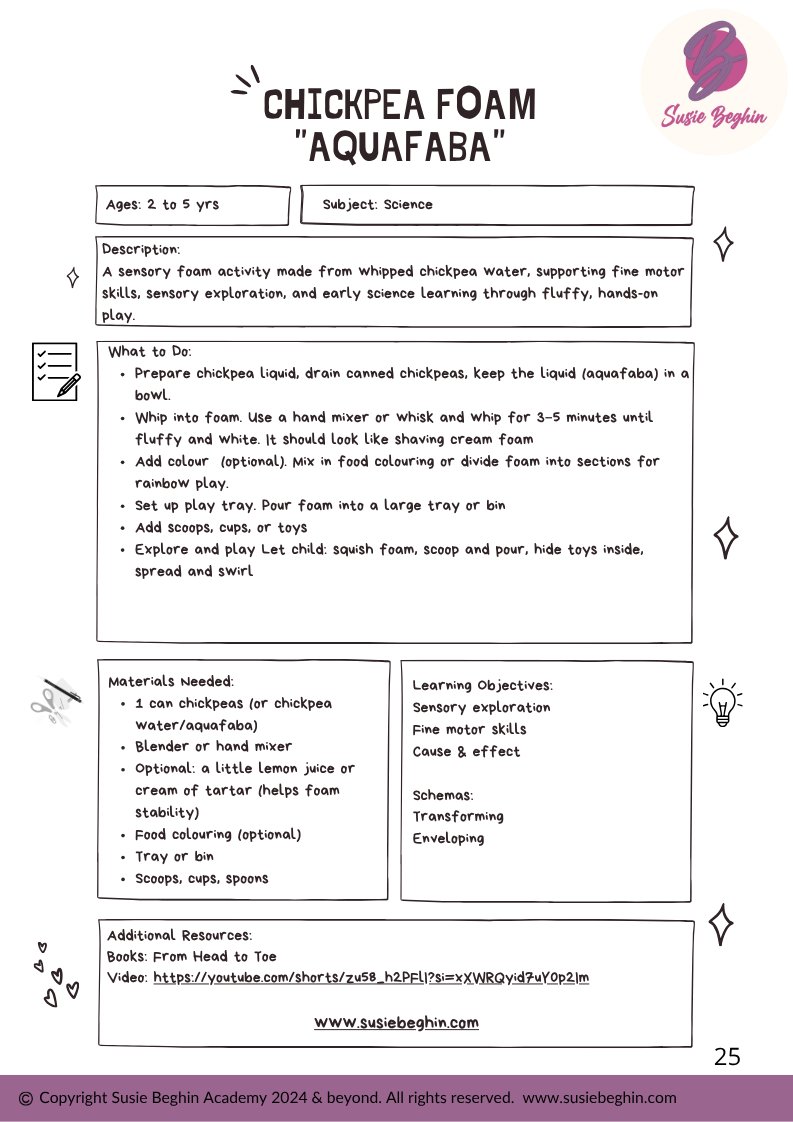
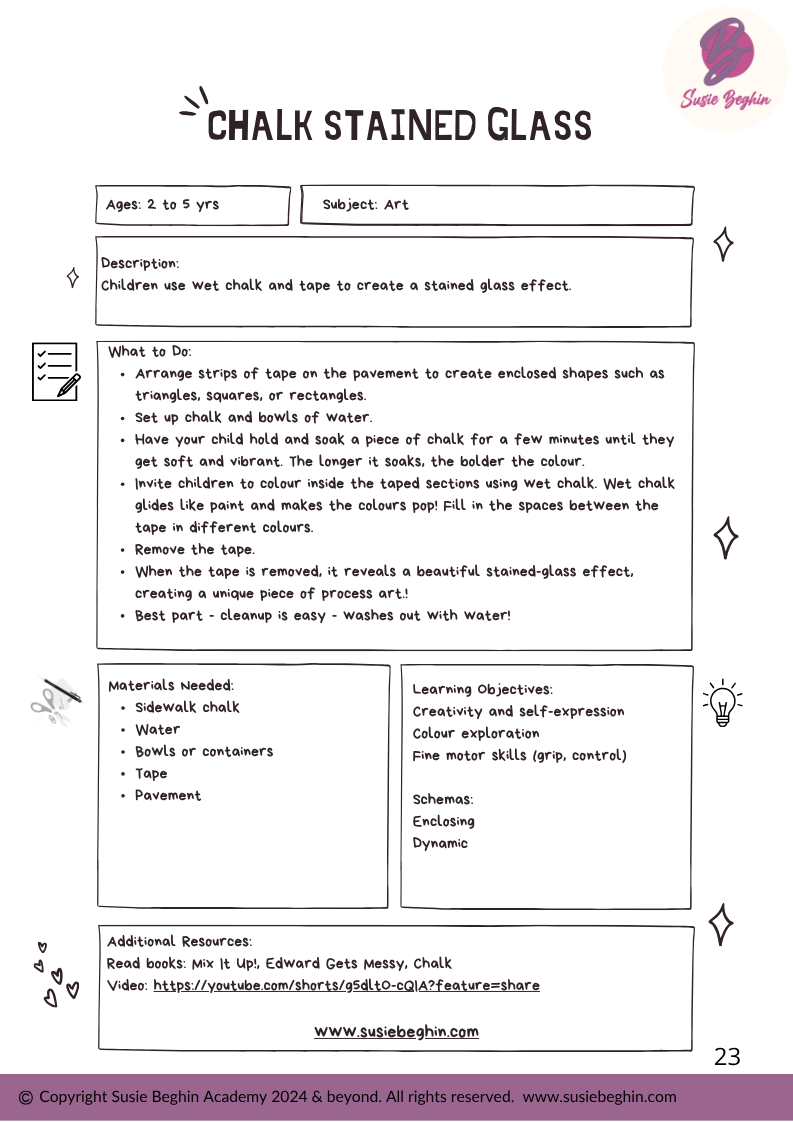
Each activity gives you the details you need to move from idea to implementation, including:
- The materials you will need
- Clear, step-by-step instructions
- The schema connection
- The learning and skills being supported
- Ideas for extending the experience
Instead of spending hours searching, gathering ideas and writing plans from scratch, you can observe the children, identify the schema they are exploring and choose a related activity from the bundle.
You still remain responsive to the children. The bundles simply give you a strong starting point—and save you the time and mental energy of creating every experience yourself.

Support Schema Play Across the Curriculum
Children do not learn in separate subjects. One experience can involve movement, problem-solving, communication, creativity and early mathematical thinking all at once.
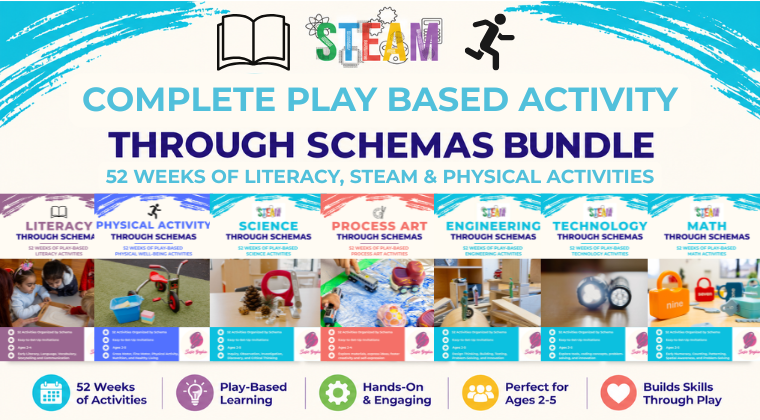
The Schema Activity Bundles allow you to intentionally support children’s natural play patterns through different curriculum and developmental areas, including:
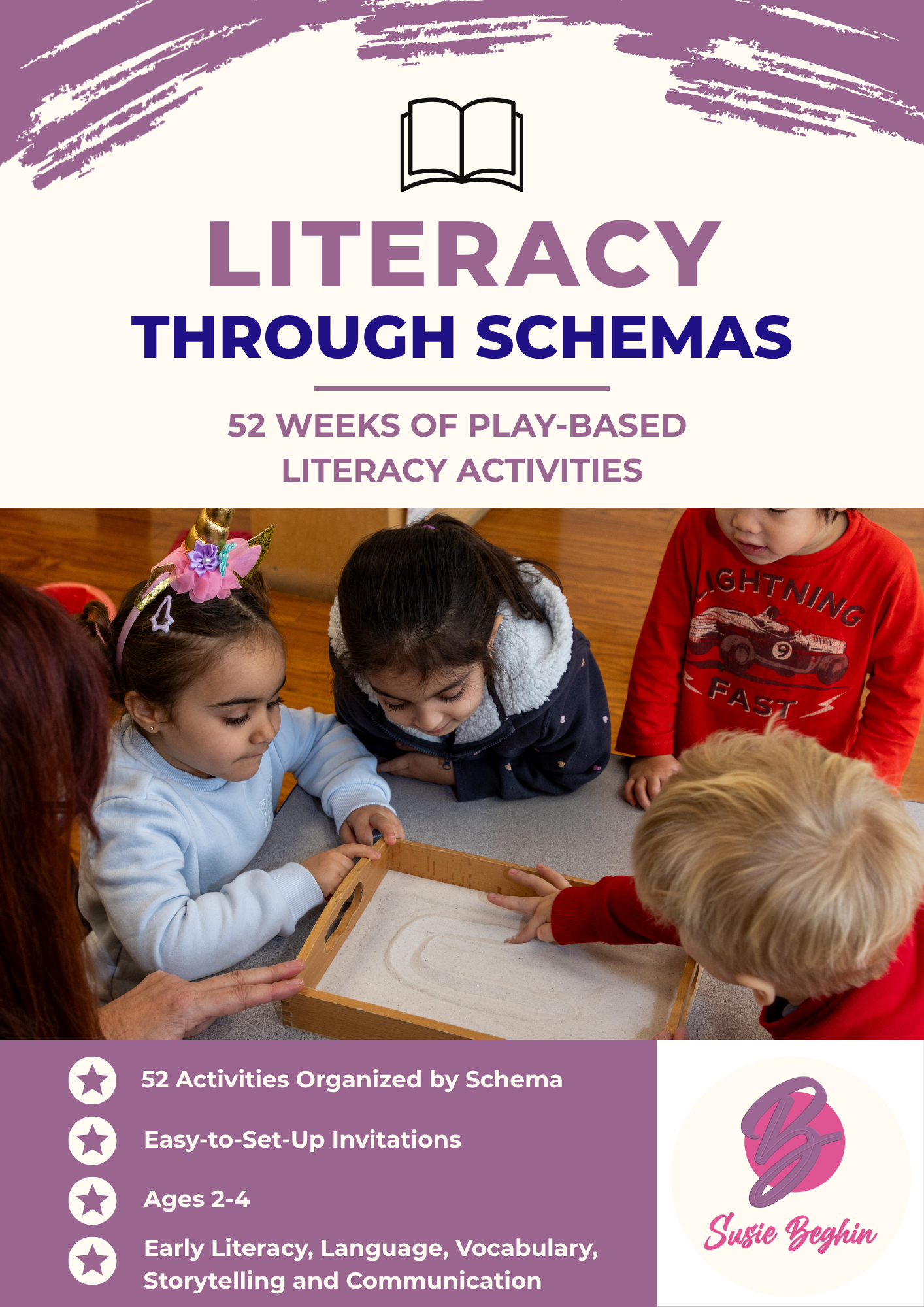
Build early language and literacy skills through playful, hands-on experiences connected to children’s schemas.
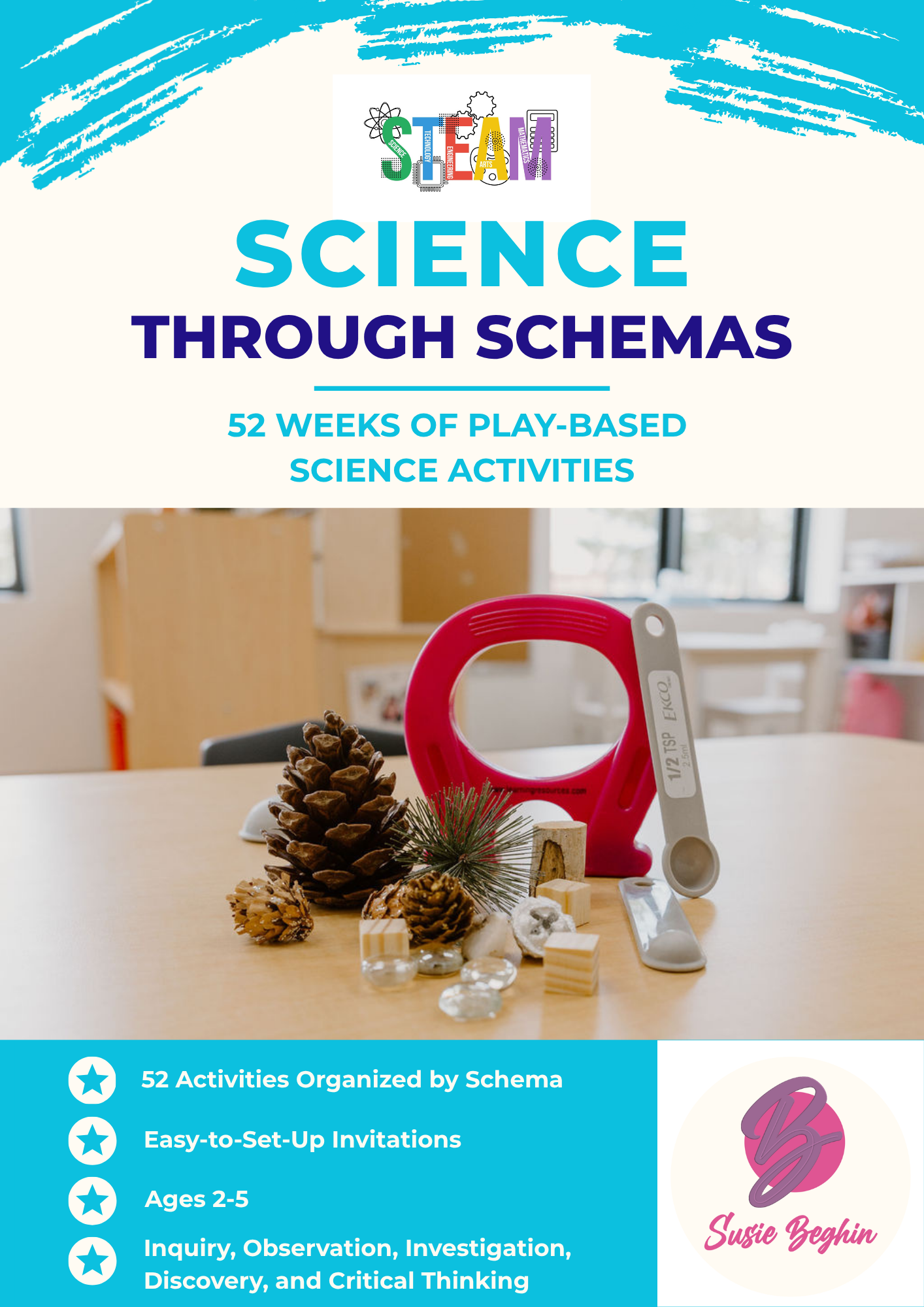
Encourage children to observe, investigate, predict, experiment and discover how the world works.
Help children explore tools, processes, cause and effect, and how things work in developmentally appropriate ways.
Support building, designing, testing, problem-solving and improving ideas through active play.
Math:
Develop early number sense, sorting, patterning, measurement, spatial awareness and mathematical thinking.
Encourage creativity, experimentation and self-expression without focusing on a predetermined finished product.
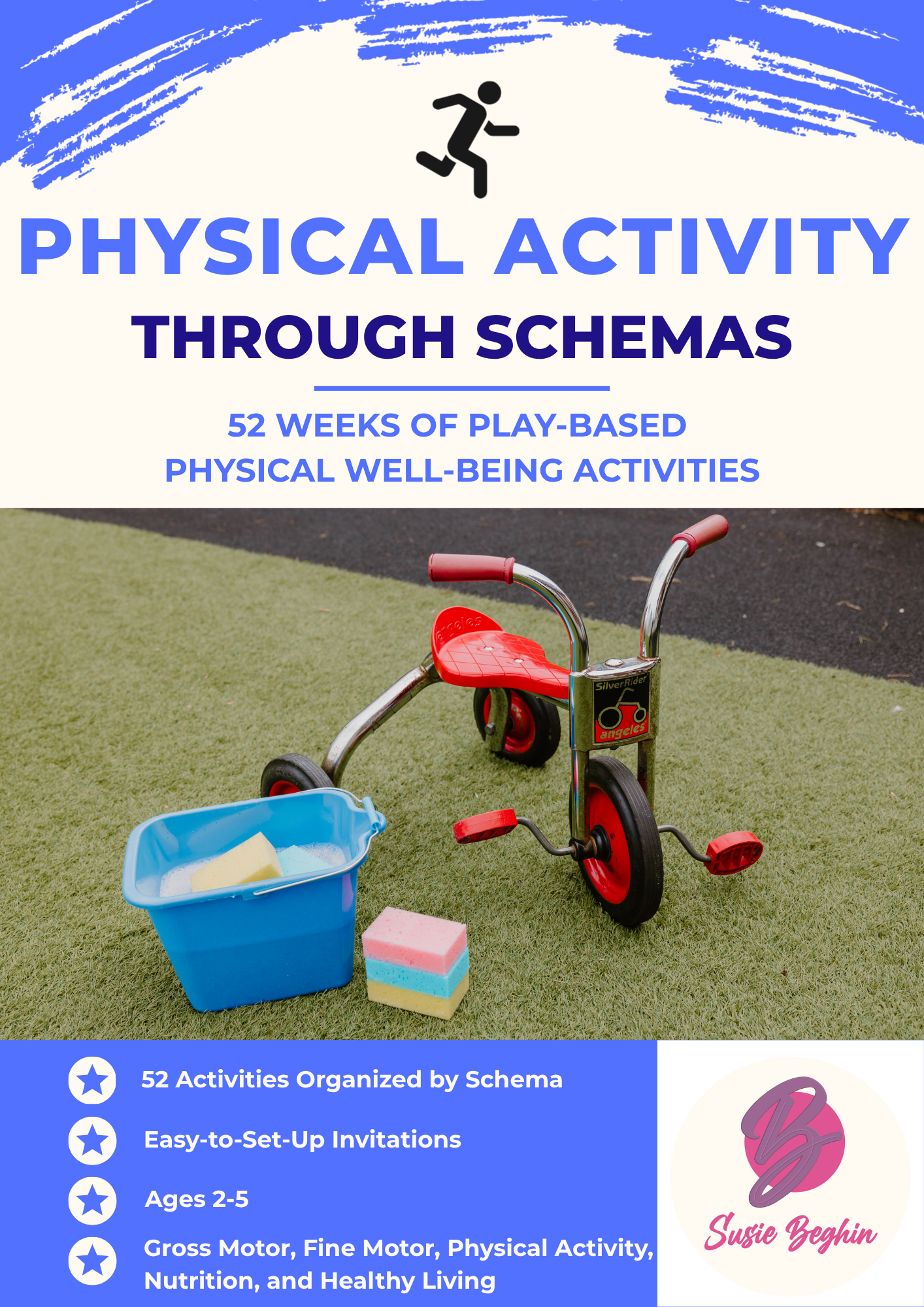
Build gross-motor skills, fine-motor skills, coordination, balance, body awareness and healthy-living concepts.
You can select the bundle that best fits your current program needs or use several bundles to create a more complete schema-based curriculum across the year.
A Simpler Way to Plan Your Week—or Your Entire Year
Imagine beginning your planning by observing what the children are already doing.
You notice several children are interested in transporting. Instead of searching for a weekly theme or wondering how to keep them engaged, you choose transporting activities from the curriculum area you want to support.
You might select a literacy experience one day, a science investigation another day and a physical activity later in the week.
The children’s interest remains at the centre of the planning, while you intentionally support a wide range of skills.
With ready-to-use activities available, you can:
- Plan more quickly and confidently
- Respond to children’s interests while they are still relevant
- Offer meaningful extensions instead of unrelated activities
- Create balance across developmental and curriculum areas
- Reduce the stress of constantly searching for new ideas
- Build a full year of purposeful, play-based experiences
The result is planning that feels more manageable for you and more meaningful for the children.
What This Looks Like in Practice
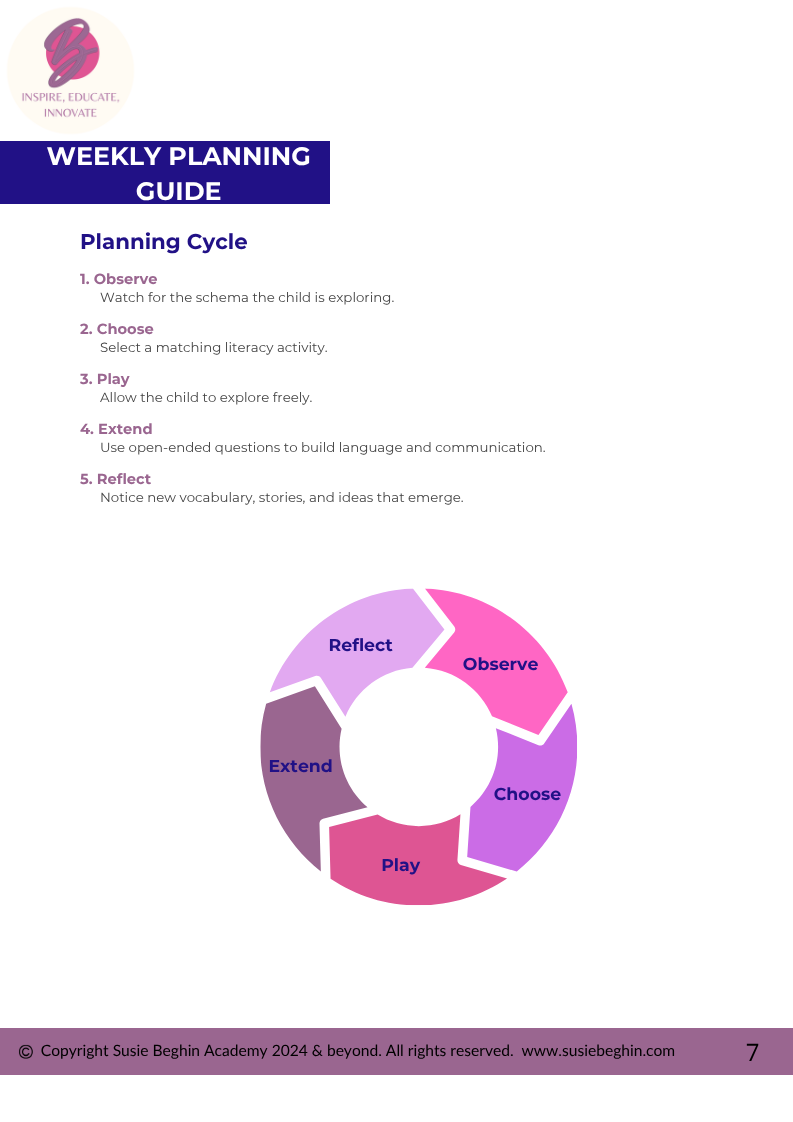
The process is simple:
- Observe what the children repeatedly do during play.
- Identify the schema or play pattern they may be exploring.
- Choose an activity from the Schema Activity Bundles that supports that schema and the curriculum area you want to develop.
- Prepare the listed materials and follow the step-by-step plan.
- Watch and listen as the children explore, then use the extension ideas to deepen the learning when appropriate.
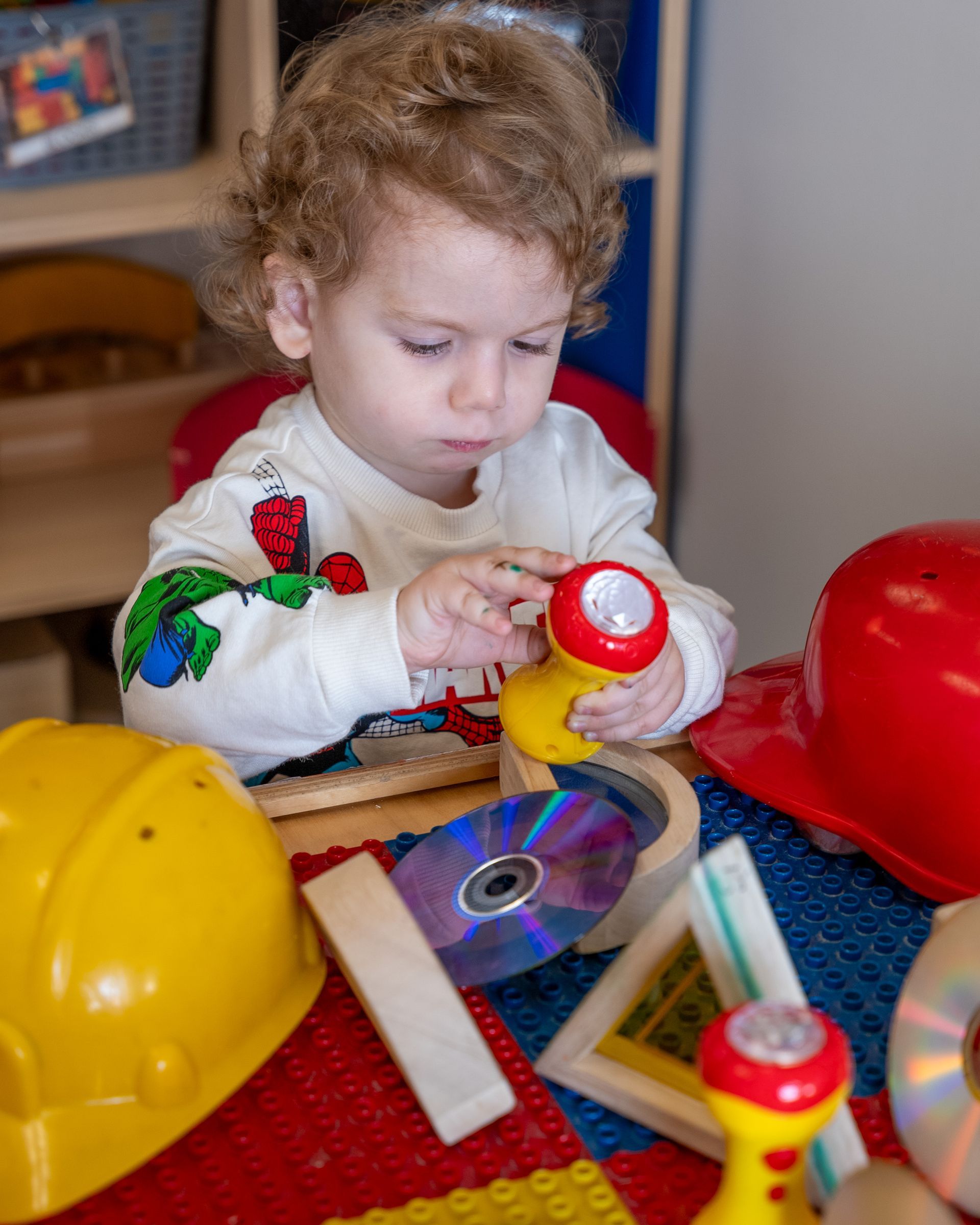
You are not forcing children into a lesson. You are using their own interests as the starting point for intentional teaching.
Spend Less Time Planning and More Time Engaging
You do not need another folder filled with random activity ideas you may never use.
You need practical plans that help you understand why an experience matters, how it connects to children’s play and exactly how to offer it.
The Schema Activity Bundles
were created from years of observing schema play in real early childhood programs and using those observations to plan meaningful experiences. They bring together the theory of schemas and the practical support educators need every day.
If you are ready to stop starting from scratch, save valuable planning time and feel more confident extending children’s interests, these bundles were created for you.
Observe the play. Recognize the schema.
Choose the experience. Extend the learning.
Ready to Make Schema-Based Planning Easier?
Explore the
Schema Activity Bundles
and choose the curriculum areas that best support the children in your program—or build your complete collection and have purposeful activity plans ready for the year ahead.